Comparing auto insurance quotes can help you understand your coverage options and identify a policy that fits your needs and budget. However, the lowest price does not always provide the right level of protection. When comparing quotes, it is important to look at coverage limits, deductibles, optional protections, discounts, and other policy details—not just the premium. This guide explains how to compare auto insurance quotes and what to consider before choosing coverage.
What Should You Compare in an Auto Insurance Quote?
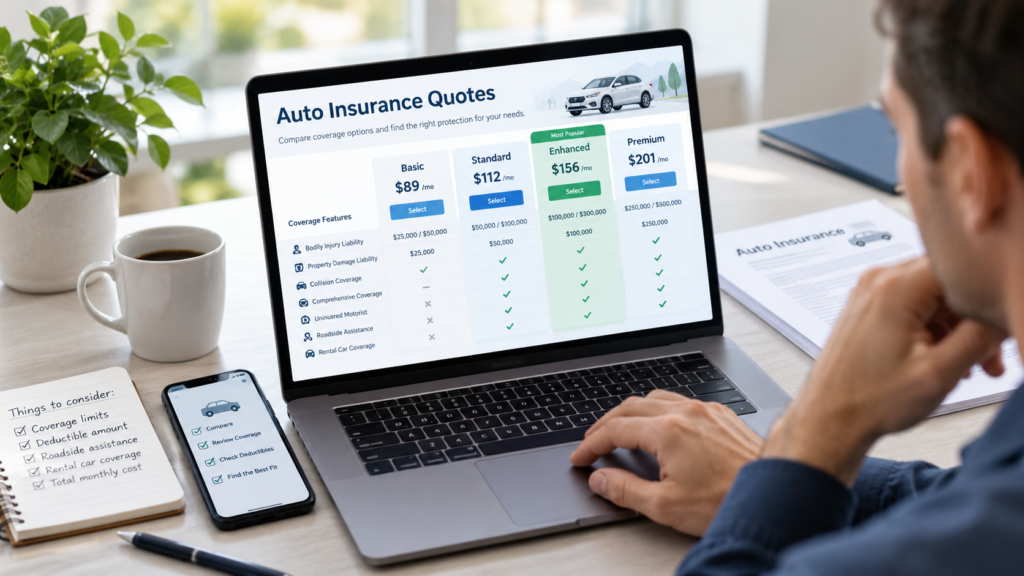
When comparing auto insurance quotes, make sure you are comparing similar coverage rather than looking at price alone. Two quotes can have very different premiums because they include different liability limits, deductibles, optional protections, or discounts. Reviewing these details side by side can help you understand what you are actually getting for the price.
Coverage Limits
Compare the liability limits included with each quote. Higher limits may provide greater financial protection if you are responsible for an accident, but they can also affect your premium. Make sure each quote uses similar limits so you can make a meaningful comparison.
Deductibles
A deductible is the amount you generally pay out of pocket before certain coverage applies to a covered claim. Choosing a higher deductible may lower your premium, while a lower deductible may increase it. When comparing quotes, check that the collision and comprehensive deductibles are similar.
Collision and Comprehensive Coverage
Collision coverage generally helps pay for damage to your vehicle from a collision, while comprehensive coverage generally applies to certain non-collision losses such as theft, vandalism, or weather-related damage. Check whether each quote includes these coverages and compare their deductibles and limits.
Optional Coverages
Optional coverages can vary by insurer and may include options such as rental car reimbursement, roadside assistance, or other protections. When comparing auto insurance quotes, check which optional coverages are included, which cost extra, and whether they are useful for your needs.
Discounts
Discounts can have a meaningful effect on your premium. Depending on the insurer, discounts may be available for safe driving, bundling multiple policies, certain vehicle safety features, automatic payments, or other qualifying factors. When comparing quotes, review the discounts applied to each option and ask whether additional discounts may be available.
Why Auto Insurance Quotes Can Vary Between Companies
Auto insurance companies do not all calculate premiums the same way. Each insurer may weigh factors such as your driving history, location, vehicle, coverage selections, annual mileage, and other rating factors differently. Because of this, two companies can offer similar coverage at noticeably different prices, which is one reason it can be useful to compare auto insurance quotes from multiple companies.
How to Get Accurate Auto Insurance Quotes
When you compare auto insurance quotes, provide accurate and consistent information when requesting each quote. Details about your vehicle, drivers, driving history, address, annual mileage, and desired coverage can affect the quoted premium. Using the same information and similar coverage selections for each quote makes it easier to compare your options fairly.
For additional guidance on shopping for coverage, visit the NAIC’s Consumer Auto Insurance Guide.
Common Mistakes to Avoid When Comparing Auto Insurance Quotes
One common mistake is choosing the lowest-priced quote without checking what coverage is included. A lower premium may come with lower liability limits, higher deductibles, or fewer optional protections. Also avoid comparing quotes with different coverage selections, overlooking available discounts, or providing different information to each insurer. Comparing similar coverage and reviewing the details of each quote can help you make a more informed decision.
Questions to Ask Before Choosing an Auto Insurance Quote
Before choosing a quote, make sure you understand exactly what you are buying. Ask about the liability limits, deductibles, optional coverages, available discounts, and any exclusions or restrictions that may affect your protection. You may also want to ask how changes to your deductible or coverage limits would affect the premium. Taking a few minutes to clarify these details can make it easier to compare your options with confidence.
Frequently Asked Questions About Comparing Auto Insurance Quotes
How many auto insurance quotes should I compare?
There is no required number of quotes to compare, but reviewing options from several insurers can give you a better sense of the coverage and prices available to you. The key is to compare similar coverage limits, deductibles, and optional protections so the differences between quotes are meaningful.
Does getting multiple auto insurance quotes affect my credit?
Requesting auto insurance quotes generally does not lower your credit score. In states where permitted, insurers may use credit-based insurance information as one factor when determining premiums, but this type of inquiry is generally considered a soft inquiry rather than a hard credit inquiry. Rules regarding the use of credit information for insurance vary by state.
Why do auto insurance quotes vary so much between companies?
Different insurers use their own pricing methods and may weigh factors such as driving history, location, vehicle type, annual mileage, coverage selections, and available discounts differently. As a result, two companies may offer similar coverage at different prices, which is why comparing multiple auto insurance quotes can be helpful.
What information do I need to compare auto insurance quotes?
To compare auto insurance quotes accurately, you will typically need information about the drivers and vehicles being insured, your address, driving history, estimated annual mileage, and the types and limits of coverage you want. Providing the same information and requesting similar coverage from each insurer makes it easier to compare quotes fairly.
Is the cheapest auto insurance quote always the best option?
Not necessarily. A lower-priced quote may include lower coverage limits, higher deductibles, fewer optional protections, or different exclusions than another quote. Compare the coverage, limits, deductibles, discounts, and policy details alongside the price so you can choose an option that fits your needs and budget.
Ready to Compare Auto Insurance Quotes?
Comparing auto insurance quotes can help you understand your options and find coverage that fits your needs and budget. Clear Coverage Guide makes it easy to request a free coverage review and explore your available options.